




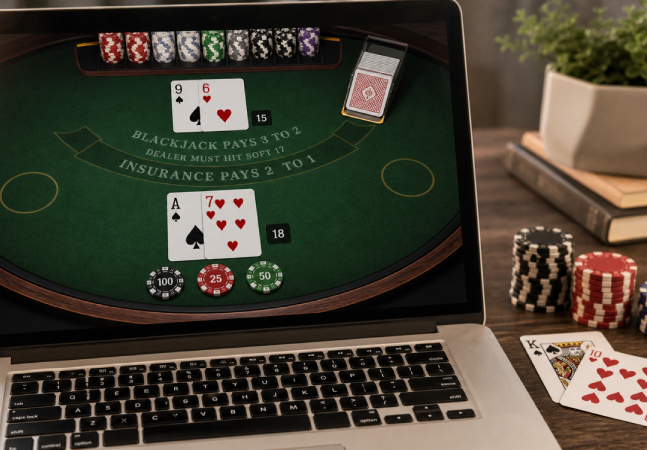
A casino lobby can feel busy before a player even chooses a game. Slots flash in dozens of themes, roulette tables promise a familiar spin, and live studios now recreate much of the floor experience through streaming. In that crowded space, blackjack keeps a different kind of appeal: it is easy to recognize, quick to understand, and still detailed enough to reward attention.
That balance explains why the game travels so well from physical tables to digital casinos. The goal is simple, getting closer to 21 than the dealer without going over, but the choices around each hand give the game more texture than a pure spin-or-click format.
A familiar table game in a faster lobby
Blackjack has always benefited from a clear visual language. Cards, chips, a dealer hand, and a decision point tell the player what kind of game they are entering. Online versions keep those signals, even when the interface is simplified for a phone or laptop.
That familiarity matters because modern casino sites are built around choice. A player may move from a slot catalogue to a roulette table, then into a card game within a few taps. Blackjack survives that speed because it does not need a long introduction. The question is not what the game is, but which version suits the session.
The appeal is not only the rules
The basic rules are only the starting point. Blackjack also asks players to make small decisions: hit, stand, split, double, or avoid a side bet. Those decisions do not remove chance, and they do not guarantee a result, but they make each hand feel more involved than simply waiting for an outcome.
This is why blackjack often appeals to people who like casino games with a visible rhythm. There is a beginning, a decision, and a resolution. The pace can be brisk, but it is not shapeless. A player can see why one hand felt cautious and another felt aggressive, even when the final card still decides the moment.
What players compare before choosing a table
Digital blackjack is not one fixed product. A lobby may include classic RNG tables, multi-hand versions, live dealer rooms, low-limit tables, higher-limit seats, and variants with side bets or altered rules. Someone comparing blackjack online is usually trying to sort through those differences before playing: how many hands are available, whether the dealer stands or hits on soft 17, how side bets are presented, and whether the experience feels better as a short solo session or as a live table.
That kind of comparison is useful because the same game name can hide very different moods. A quick automated table may suit someone who wants a compact session. A live dealer table may feel closer to a traditional casino visit, but it also asks for more patience and a stable connection. A multi-hand table changes the tempo again, because several decisions can arrive in the same round.
Live and automated formats create different moods
The biggest split in online blackjack is between automated and live formats. Automated blackjack uses software to deal the cards and resolve the hand. It tends to be fast, clean, and easy to pause between rounds. For players learning the flow of the game, that can make rules and table settings easier to review.
Live blackjack changes the feel. A real dealer, streamed table, seat limits, chat windows, and timed decisions bring back some of the social pressure of a casino floor. It is more atmospheric, but it is also less casual than tapping through a practice-style interface. The better choice depends on what the player wants from the session.
Good sessions start before the first hand
Before choosing any table, players should slow down enough to read the rules, limits, and payout notes. A rules-focused reference such as Bicycle Cards' blackjack guide is useful because it breaks the game into the same building blocks that matter online: card values, the dealer's turn, hit, stand, double down, split, and insurance.
Those basics fit blackjack particularly well. A table can look familiar while still carrying details that affect the experience: minimum bet, insurance rules, side-bet options, number of decks, and live-table timing. Checking those details is part of choosing the right format.
Why the game keeps its place
Blackjack keeps its place because it sits between pure chance and visible decision-making. It has enough structure for guide-style content, enough pace for short sessions, and enough variations to keep a casino lobby from feeling repetitive. Readers who want to go deeper can also browse CasinosAvenue's Blackjack section for rules, strategy explainers, and related table-game articles.
That is the quieter reason blackjack still stands out. It does not need the loudest theme or the largest jackpot banner. It only needs a table, a clear set of choices, and a player who understands that the cards can still surprise everyone.




.jpg)
.jpg)





How does it work?
Locate and discover worldwide casinos
Find their promotions, events and enjoy exclusive deals
Good luck!