




.jpg)
Canada's land-based casino market has, over the years, built a reputation that quieter destinations rarely get credit for: stable, integrity-driven, and genuinely diverse. There's no Las Vegas flash here, no manufactured spectacle for its own sake.
What Canada offers instead is something arguably more valuable: a gaming environment grounded in rigorous provincial oversight, one where profits cycle back into the public good, and players actually trust the floor they're standing on.
That trust hasn't come by accident. It's been deliberately cultivated through a regulatory framework that keeps operators accountable and ensures consistent reinvestment. The result is a market that doesn't just survive competition, it compounds. Canadian casinos now generate more than CA$16 billion annually in combined land-based gaming revenue, according to consolidated provincial lottery corporation annual reports (OLG, Loto-Québec, Atlantic Lottery).
That figure, an estimate for the 2024 - 2025 period, reflects the industry's recovery and acceleration following the return of international tourism and the full operational maturity of legal sports betting, which was legalized nationwide in 2021 and had reached its stride across most provinces by 2025.
Partnerships with Indigenous communities remain a cornerstone of the industry's structure. Casinos like Casino Rama Resort in Ontario, situated on First Nations land, demonstrate what genuine economic partnership looks like in practice, job creation, revenue sharing, and cultural engagement working in tandem.
Several provinces doubled down on these partnerships in 2025, opting to upgrade and expand existing facilities rather than build new standalone properties. It's a considered, measured approach that suits the Canadian temperament well.
Geography also works in the industry's favour. The Niagara Falls corridor alone draws approximately 12 million visitors each year. British Columbia and Quebec serve international tourists from vastly different regions.
And increased cross-border travel in 2025, combined with new sportsbook lounges and upgraded electronic table games, has had an interesting effect on the demographic: younger audiences are coming through the doors, drawn in part by the event wagering culture and the immersive viewing environments that modern casino floors now offer.
Casino de Montréal, Québec
Canada's largest and most iconic casino doesn't need to shout. Anchored on Notre Dame Island and housed in former Expo '67 pavilions, Casino de Montréal carries an architectural confidence that most gaming venues simply can't manufacture, because you can't fake history.
Operating under Loto-Québec's trusted model, the casino returns its profits to the public while drawing millions of visitors through its doors each year.

The gaming floor runs deep: over 3,000 slot machines, around 100 table games, and a dedicated poker room that holds its own against any comparable venue on the continent.
But calling it just a casino would be underselling the experience. Four gourmet restaurants, several bars, and the Cabaret du Casino, a 500-seat theatre offering nightly shows and concerts, make it a destination in the fuller sense. In 2025, the property rolled out upgraded electronic table games and modernized player tracking systems, part of the broader Canadian shift toward hybrid digital-assisted gaming floors.
A new 200-room hotel is currently under construction, and ongoing facility improvements suggest this institution isn't resting on its laurels anytime soon.
Casino Niagara, Ontario
Proximity to one of the world's most visited natural landmarks will always be good for business, but Casino Niagara has never simply coasted on its postcode.
Since opening in 1996, the property has evolved into a genuinely dynamic gaming destination, with over 1,300 slot and video poker machines, approximately 30 live dealer tables, and a dedicated Poker Room with 18 tables give it real substance beneath the spectacle.
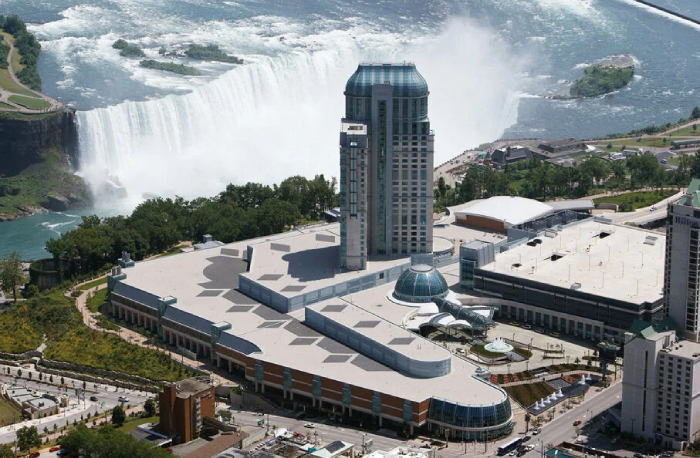
The real momentum-shifter in 2025 was the addition of a sportsbook, introduced as part of Ontario's regulated sports betting rollout. Traffic surged, particularly during major sporting events, and the LEV2L Sports Bar & Entertainment venue, with its live music and wall-to-wall HDTV screens, was built for exactly that kind of crowd.
There's no on-site hotel, but Casino Niagara is connected to the Falls Avenue resort complex and several partner properties, keeping the visitor experience seamless. For day-trippers and cross-border visitors alike, it remains one of the most reliably entertaining stops in the region.
Casino Rama Resort, Ontario
About 90 minutes north of Toronto, Casino Rama Resort operates on a register entirely different. Opened in 1996 as Ontario's only First Nations casino, it was designed from the outset to be more than a gaming floor, and that's exactly what it became.
The resort integrates approximately 1,800 slot machines and 45 to 50 live tables, blackjack, baccarat, roulette, and a dedicated Texas Hold'em poker room, with a 289-room luxury hotel, a full-service spa, indoor pool, and a 5,000-seat entertainment centre that pulls in touring concerts year-round.
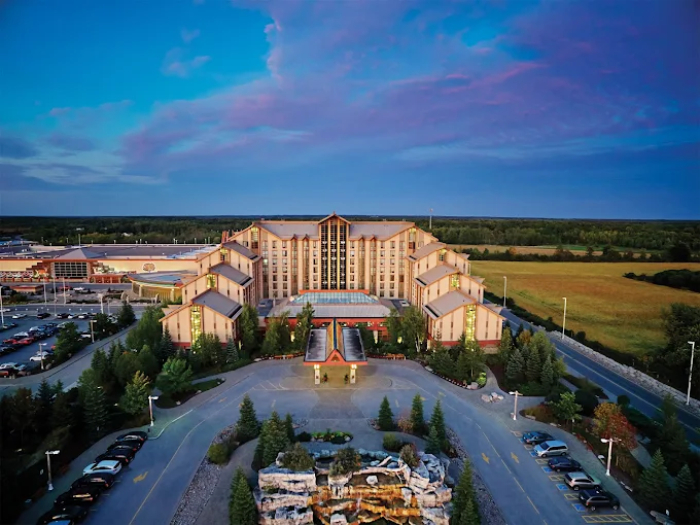
Visitation climbed again in 2025, recovering ground lost earlier to digital competition. Expanded VIP gaming areas and a revamped rewards program reflect a national shift toward loyalty-driven engagement.
Casinos are increasingly competing on experience and recognition, not just game variety. For visitors willing to make the drive, Rama remains one of the most complete resort-casino packages in the country.
River Rock Casino Resort, British Columbia
River Rock sits on the Fraser River in Richmond, minutes from Vancouver International Airport, and that location is deliberate; it's built to catch traffic as much as create it.
As British Columbia's first full-scale casino resort, it has spent years establishing itself as the go-to destination for high-limit baccarat players, drawing both local regulars and international guests who know exactly what they're looking for.
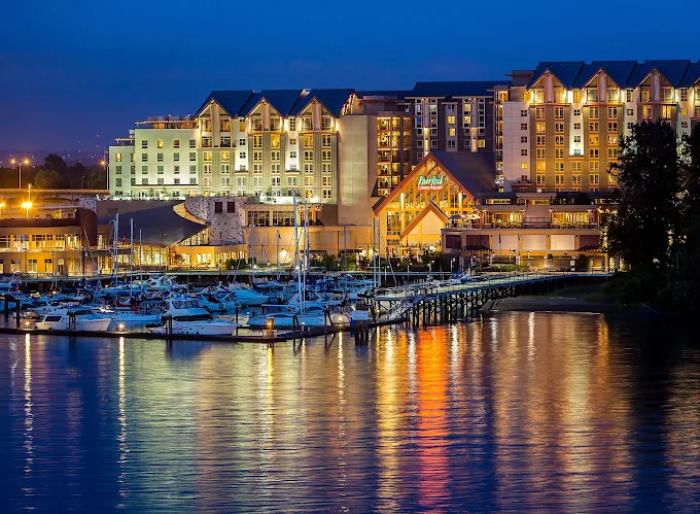
The gaming floor offers around 1,000 to 1,100 slot machines and approximately 75 live table games. In 2025, the casino expanded its electronic table game area and sportsbook offerings, in step with province-wide growth in event wagering.
Beyond the floor, the property features over 200 hotel rooms, spa and fitness facilities, an indoor tropical swimming pool, and the River Rock Show Theatre, a programming anchor that keeps the resort relevant to guests who aren't there primarily to gamble. That shift toward integrated entertainment isn't accidental; it's the direction the entire industry is moving, and River Rock is moving with it.
Casino du Lac-Leamy, Québec
Across the river from Ottawa in Gatineau, Casino du Lac-Leamy makes a strong argument for Quebec's government-operated model.
Since opening in 1996, the property has grown into a major entertainment complex drawing over 2.5 million visitors annually, figures that reflect genuine demand, not just proximity to the capital.
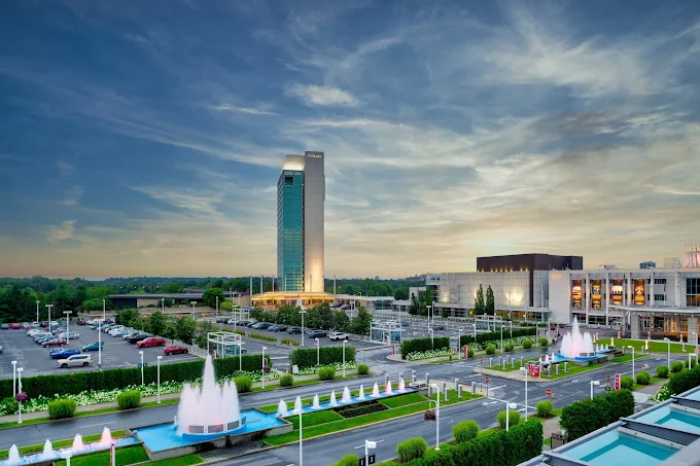
The gaming offering is substantial: over 1,800 slot machines, more than 65 table games, and a well-established poker room. Recent renovations brought enhanced security technology and automated roulette terminals, part of the same modernization wave rolling through Quebec's casino portfolio.
Off the floor, the four-diamond Lac-Leamy Hotel, multiple dining venues, and the Théâtre du Casino round out an experience designed for extended stays. The casino also anchors community events like the Sound of Light festival, a reminder that at this scale, a casino isn't just a venue. It's infrastructure.
Conclusion
Canada's casino industry is growing deliberately. The 2024–2025 period was defined not by the construction of new mega-resorts but by the quiet, sustained modernization of existing ones, sportsbook lounges, hybrid gaming floors, upgraded loyalty programs, and renewed tourism partnerships doing the heavy lifting.
That restraint is, in many ways, the point. A market built on public trust can't afford to overcorrect in either direction. What it can do, and what Canada's casino operators are doing, is reinvest carefully, expand thoughtfully, and deliver an experience consistent enough to keep bringing people back. For players, that means a secure and well-managed environment.
For investors, it means a predictable market with diversified revenue and a proven track record. And for the industry as a whole, it means a model worth watching.









How does it work?
Locate and discover worldwide casinos
Find their promotions, events and enjoy exclusive deals
Good luck!